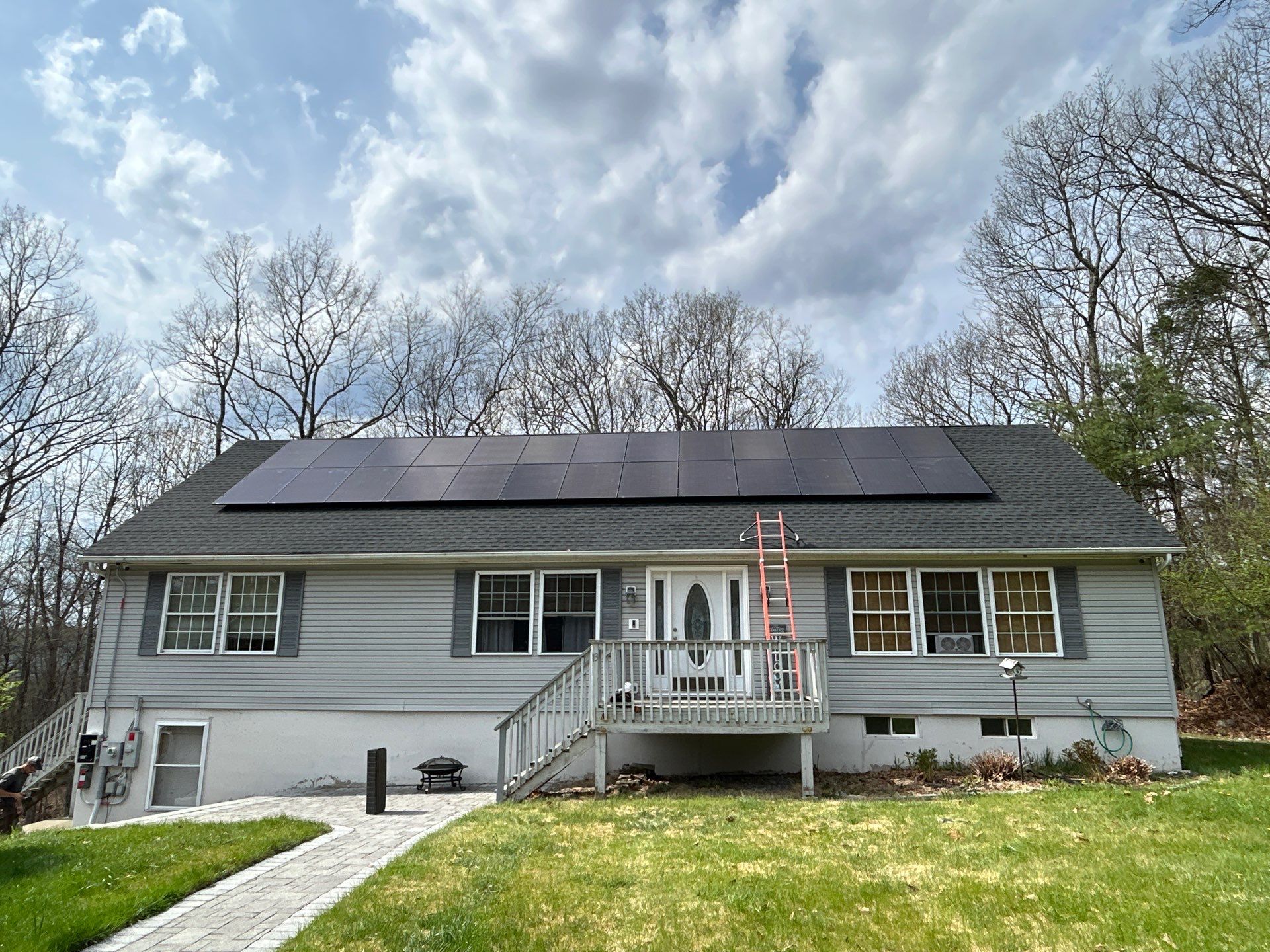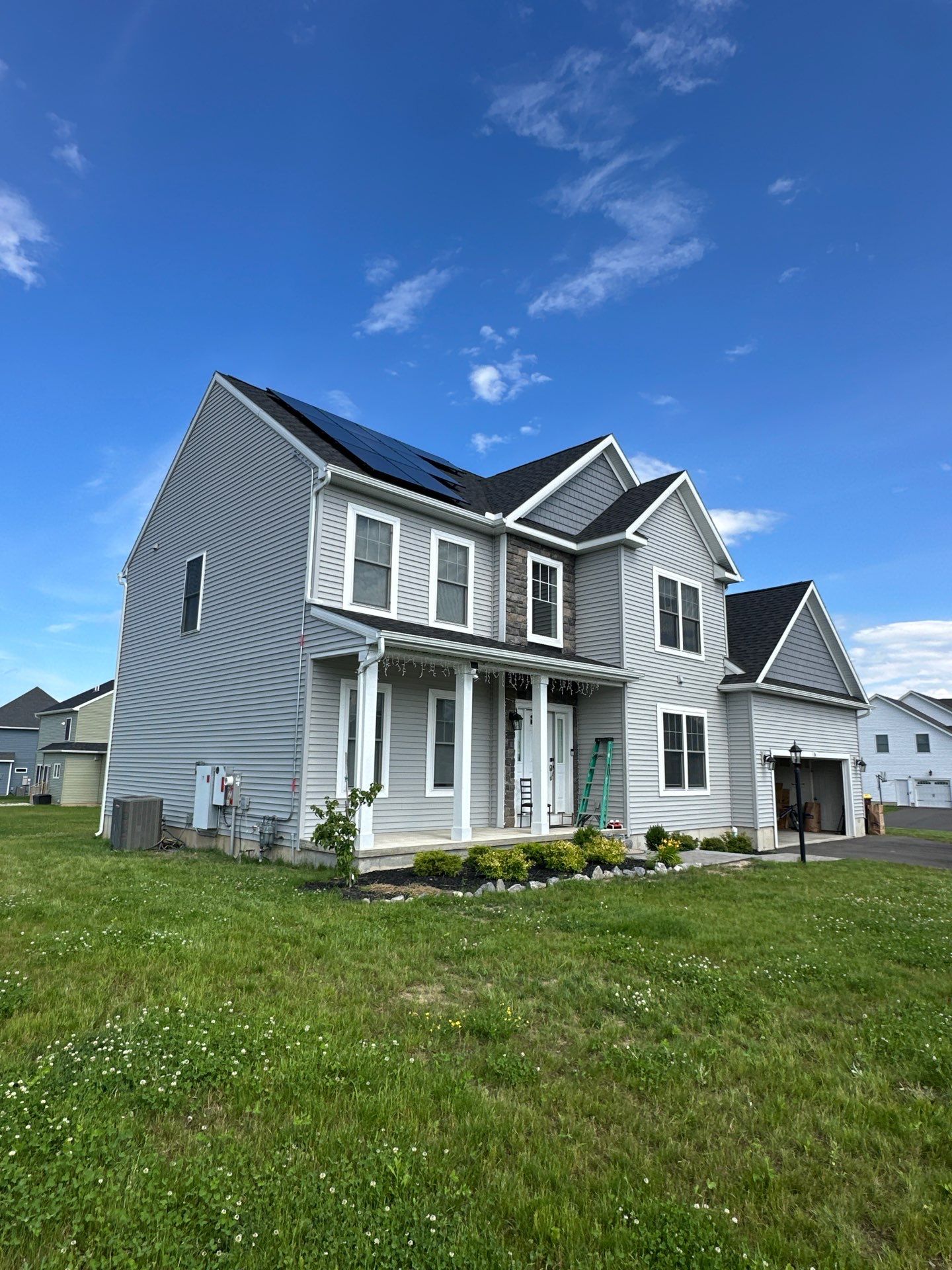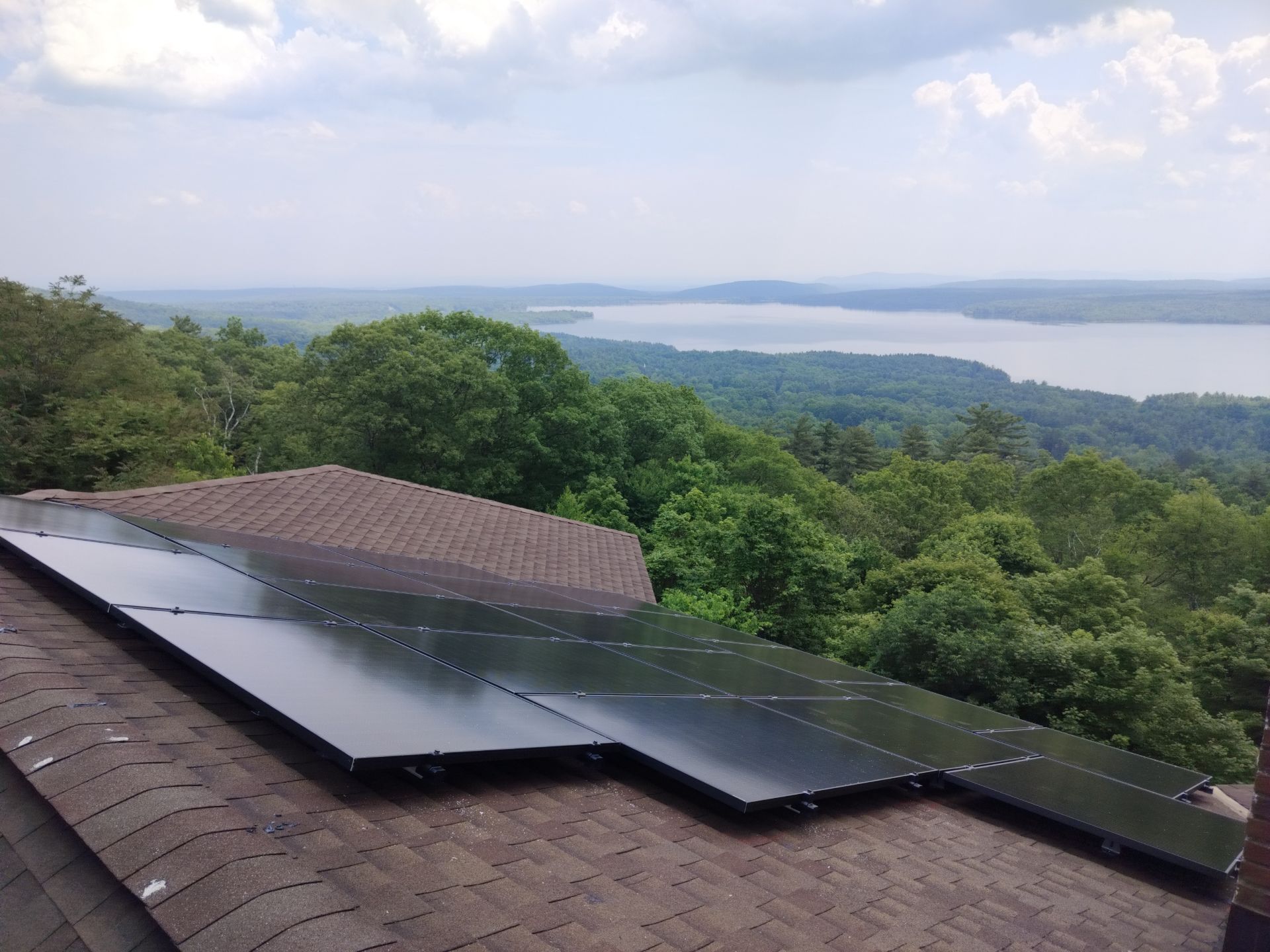

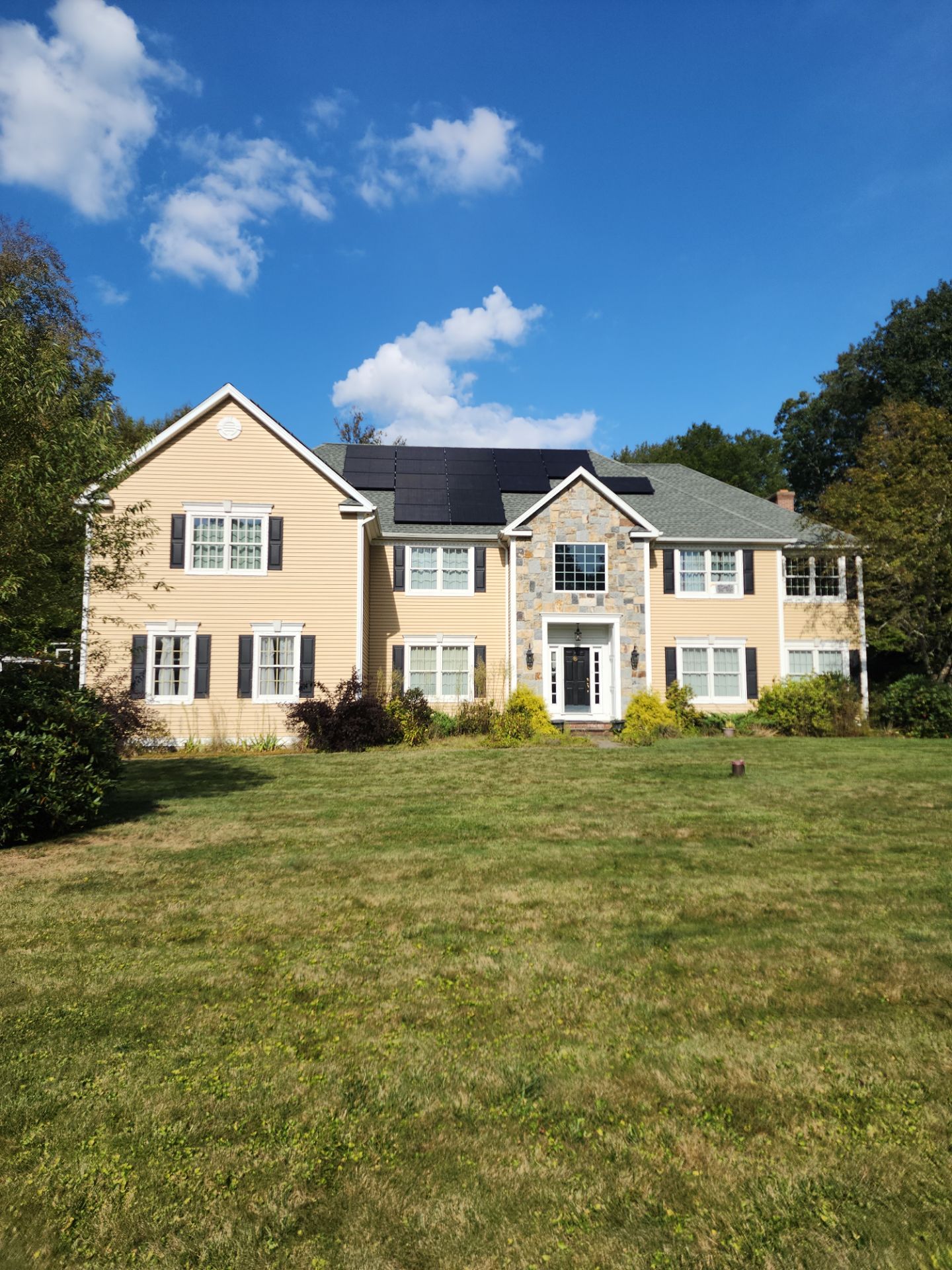
If you own a home in Fairfield County and you have opened an Eversource bill lately, you already know why so many neighbors are looking into solar panels in Fairfield County this year. Rates jumped again on January 1, 2026, and the average residential customer here now pays around 33 cents per kilowatt-hour all in. That works out to roughly $400 a month for a typical household, and considerably more for larger homes in Greenwich, Westport, and New Canaan.
Solar still makes strong financial sense for most Fairfield County homeowners in 2026. The rules changed, and the coast adds a wrinkle or two. Here is an honest, local breakdown of where things stand.
Why Fairfield County electric bills are climbing
On January 1, 2026, Eversource’s new supply rate took effect and added roughly $20 a month to the average residential bill. The supply rate itself rose about 29 percent, to 12.64 cents per kilowatt-hour, and that sits on top of delivery charges, the public benefits charge, and other line items.
Fairfield County also runs hot in summer. Central air conditioning, pool pumps, and EV charging push usage to its yearly peak right when the sun is strongest. That is exactly the window where a properly sized solar system produces the most power, which is part of why payback periods here are reasonable.
Net metering is gone. What replaced it in Connecticut?
Connecticut retired traditional net metering and replaced it with the Residential Renewable Energy Solutions (RRES) program, administered by Eversource and United Illuminating. As a Fairfield County homeowner, you choose between two options, and you are locked into your choice for 20 years.
The Netting Tariff works the most like old-style net metering. Your meter spins both directions and you bank credits for surplus production. The catch for 2026 enrollees is the Solar Energy Adjustment, a charge of 4.02 cents per kilowatt-hour applied to your total production. That is up sharply from half a cent in prior years. On a typical 11 kW system, the adjustment runs about $520 per year.
The Buy-All Tariff sends all of your production to the grid at a fixed rate of 32.89 cents per kilowatt-hour, locked for 20 years, and you buy back the power you use at retail rates. The Solar Energy Adjustment does not apply to Buy-All.
Which one wins depends on your roof, your usage pattern, and how much you run during daylight hours. There is no universal right answer, and because the choice is locked for two decades, this is where having a local installer run your actual numbers matters. We model both tariffs against your real Eversource usage before you sign anything.
What incentives do Connecticut homeowners still get in 2026?
Property tax exemption. Connecticut exempts residential solar systems from local property tax assessment for 15 years. Your panels can raise your home’s value without raising your tax bill.
Sales tax exemption. You pay zero state sales tax on solar equipment and installation in Connecticut.
Battery storage incentives. Through the Energy Storage Solutions program, residential customers can now qualify for up to $16,000 in upfront battery incentives, a meaningful jump from the prior cap. Pairing a battery like the Tesla Powerwall with solar adds backup power during storms, which matters along the shoreline.
Smart-E financing. The Connecticut Green Bank’s Smart-E Loan offers solar financing at competitive rates with terms from 5 to 15 years. We also offer $0 down financing options.
What does solar cost and pay back in Fairfield County?
Most Fairfield County homeowners see a payback period in the range of 8 to 10 years, with lifetime savings over a 25-year system life often estimated near $100,000. Those are estimates, not guarantees, and your actual result depends on usage, roof orientation, system size, and the tariff you choose.
There is one Fairfield County factor worth naming. Homes near the Long Island Sound, from Greenwich and Stamford through Norwalk, Fairfield, and Bridgeport, benefit from corrosion-resistant hardware and marine-grade racking. Salt air is hard on standard components. That can add roughly 5 to 10 percent to installation cost compared to inland towns like Danbury, Newtown, or Ridgefield, but it protects your investment for the long haul.
Should I add a roof replacement to my solar project?
If your roof is more than 15 years old, it is worth addressing before panels go up. Removing and reinstalling a solar array later to replace a worn roof is an avoidable expense. Infinity Energy has an in-house roofing division, so we can handle both as a single coordinated project rather than juggling two contractors and two schedules.
Why work with Infinity Energy
Infinity Energy has been installing solar across Connecticut, New York, and New Jersey since 2008, with more than 10,000 completed installations. We are an EnergySage Elite Plus installer, which places us in the top 4 percent of installers nationally, and we were named EnergySage Installer of the Year. We hold an A+ rating with the BBB and are a Tesla Powerwall certified installer.
Our coverage includes a 25-year panel and production warranty, a 10-year inverter warranty, and a 25-year workmanship warranty. For Fairfield County homeowners, that long-term backing matters as much as the panels themselves.
The bottom line for Fairfield County
Rates are up and net metering changed Even so, Connecticut’s tax exemptions, the RRES program, strong battery incentives, and rising utility costs keep the math working for most homeowners here in 2026. The key is getting both RRES tariffs modeled against your real usage and choosing equipment built for our coastal climate.
Want to see what solar looks like on your specific Fairfield County home? Reach out for a free, no-pressure quote and we will run your actual numbers, both tariffs included.