
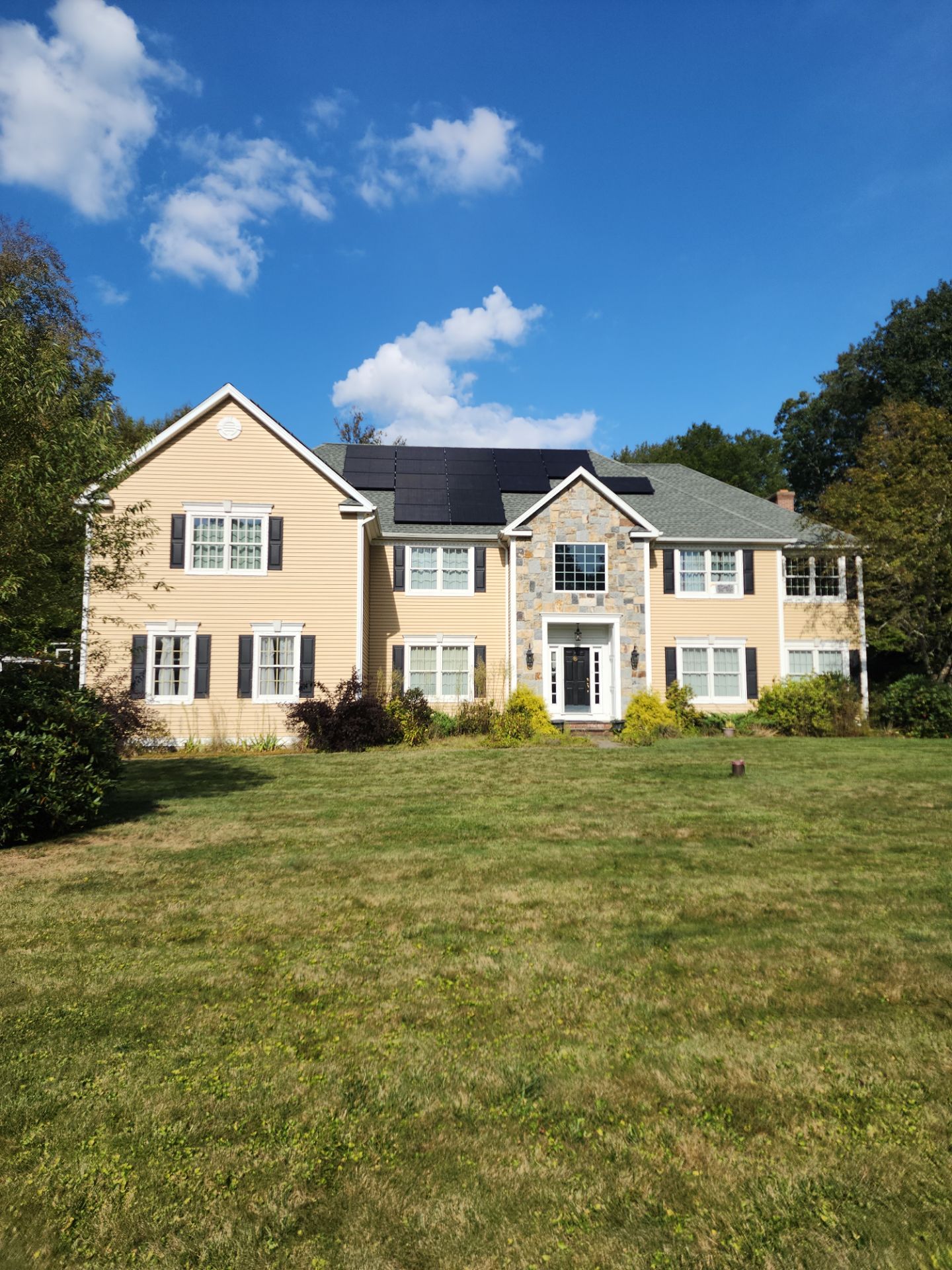
Solar panels in Dutchess County make more financial sense in 2026 than they did a year ago. The reason has less to do with equipment prices and more to do with your utility bill.
Central Hudson raised residential delivery rates again on July 1, 2026. Delivery climbed from about 13.9 cents per kWh to roughly 14.6 cents. That is close to a 5% increase, and it follows a three-year rate plan the state approved in August 2025. Under that plan, delivery rates rise again each year through mid-2028.
For the average Central Hudson household, July’s increase added roughly $6.25 a month. On its own, that is not dramatic. Stacked on several years of increases, it changes the math on a 25-year investment.
What Solar Costs in Dutchess County Right Now
Most Dutchess homes we install land between 7 and 11 kilowatts. Your size depends on your last 12 months of usage, not your roof size or your square footage.
Installed pricing across the Hudson Valley typically falls between $2.75 and $3.50 per watt before incentives. Older homes in Poughkeepsie, Rhinebeck, and Red Hook often land toward the higher end. Steep pitches, slate, and outdated electrical panels all add labor hours.
Which New York Incentives Still Apply
First, what is gone. The 30% federal Residential Clean Energy Credit does not apply to any system placed in service after December 31, 2025 (IRS). Older guides still lead with it. Everything below is what New York offers on its own.
The 25% state tax credit. New York gives residential solar owners a credit worth 25% of system cost, capped at $5,000. You claim it on Form IT-255 with your state return. The credit is not refundable, but you can carry unused amounts forward for up to five years.
Leases and power purchase agreements qualify too, which surprises a lot of homeowners. A PPA has to run at least ten years to count.
Sales tax exemption. New York exempts residential solar equipment and installation from the 4% state sales tax. Dutchess County waives its local share too, so the effective rate on your system is zero (NYS Publication 718-S).
Property tax exemption. Solar adds value to a home, and New York’s 15-year exemption under RPTL 487 keeps that added value off your assessment. Municipalities can opt out, and the state publishes the opt-out list. Dutchess currently shows a single filing on it, so confirm your own jurisdiction before you sign anything.
What Changed With NY-Sun This Year
Here is the part most solar ads leave out. NYSERDA’s Upstate Block 13 was the last residential rebate block open to Central Hudson customers. Its replacement, Block 14, covers only National Grid, NYSEG, and RG&E territories (NYSERDA operating plan update).
If an ad promises you a NY-Sun rebate on top of everything else, ask which block it draws from. For Central Hudson households, that per-watt rebate is no longer on the table. Homes in eastern Dutchess served by NYSEG may still qualify.
Income-eligible households are the exception. NYSERDA’s Affordable Solar Residential Incentive still pays $0.80 per watt for qualifying homes, generally those at or below 80% of area median income. On an 8 kW system, that works out to $6,400.
How Net Metering Works With Central Hudson
Central Hudson customers still qualify for 1:1 net metering. Every kilowatt-hour you export earns a credit at the retail rate. One line item worth knowing about: systems installed on or after January 1, 2022 also pay a small monthly Customer Benefit Contribution based on system size, which runs roughly $25 to $120 a year statewide (Central Hudson).
Systems interconnected today lock that arrangement in for 20 years. New York’s VDER value stack is the alternative. Value stack credits shift by hour and by location, and for residential systems they generally land below the retail rate. Straight net metering works out better for most homeowners here.
That 20-year lock matters more every time your utility files for another increase.
One note on geography. Central Hudson serves most of Dutchess County, including Poughkeepsie, Beacon, Hyde Park, and Wappingers Falls. A handful of eastern pockets fall under NYSEG instead, and the interconnection process differs slightly.
Roof First, Panels Second
Dutchess County holds a lot of housing built before 1980. Asphalt shingle roofs older than 15 years usually need attention before an array goes up.
Pulling a system off later to reroof costs thousands of dollars in labor you should never have to spend. Doing both jobs at once avoids that bill entirely. Our in-house roofing division handles the roof and the array under one contract, so nobody points fingers if something needs fixing later.
What Payback Actually Looks Like
We do not guarantee savings figures, and no honest installer should. Too much rides on your usage, your roof orientation, and your shading.
What we can say: the payback window in Central Hudson territory has shortened as delivery rates climbed. The state tax credit does real work here, often removing $4,000 to $5,000 from a typical project’s net cost.
A useful proposal shows three things. It pulls your actual 12 months of Central Hudson usage. It models production for your specific roof planes. And it lists only the incentives you personally qualify for. Anything vaguer than that deserves a second look.
Permits and Timelines in Dutchess County
Every town runs its own building department, and approval speeds vary. East Fishkill, Wappinger, and Hyde Park each move at a different pace than the City of Poughkeepsie.
Plan on roughly 8 to 14 weeks from signed agreement to Permission to Operate. Central Hudson’s interconnection review and your town’s inspection calendar drive most of that timeline. A good installer files everything for you and tells you where the project stands.
Why Hudson Valley Homeowners Choose Infinity Energy
Infinity Energy has completed more than 10,000 installations across New York, New Jersey, and Connecticut. EnergySage ranks us an Elite+ installer, a tier covering the top 4% of companies nationally, and named us Installer of the Year.
Other credentials worth checking: an A+ rating with the BBB, NYSERDA Gold installer status, and membership in the Amicus Solar Cooperative. Our warranty runs 25 years on panels and production, 10 years on inverters, and 5 years on workmanship. We also offer $0 down financing for homeowners who want it.
Curious what your roof and your Central Hudson bill actually support? Reach out for a free, no-pressure assessment. We will pull your usage history and walk you through real numbers for your address.