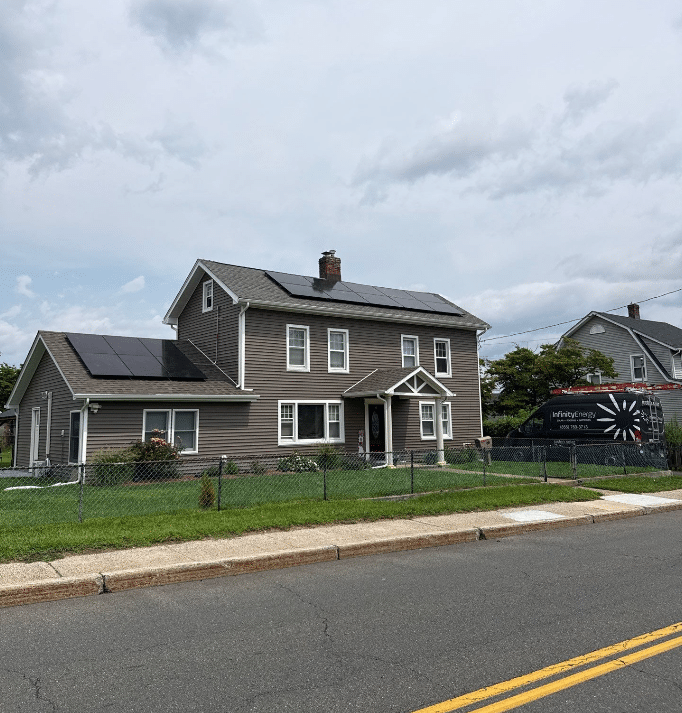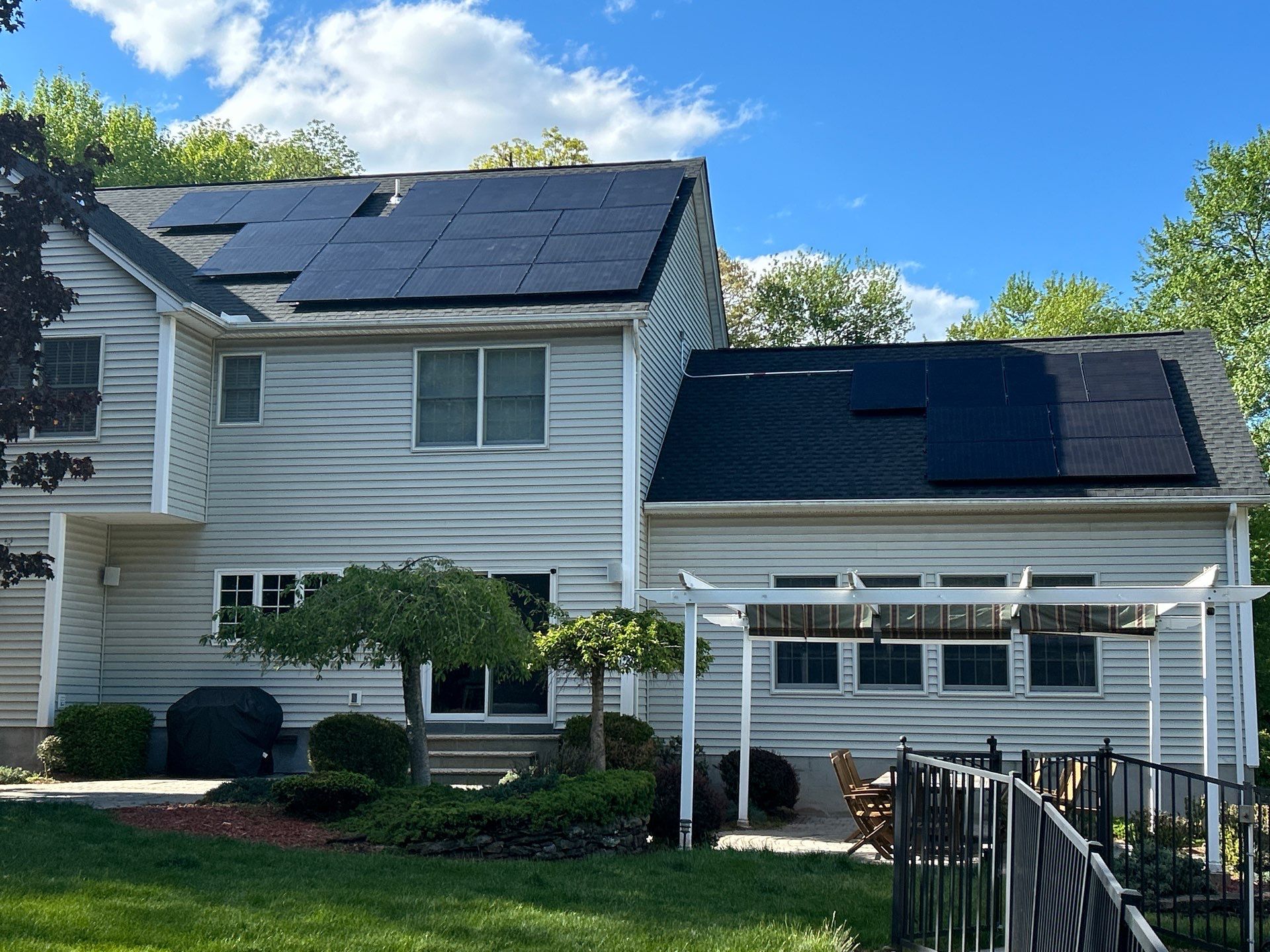

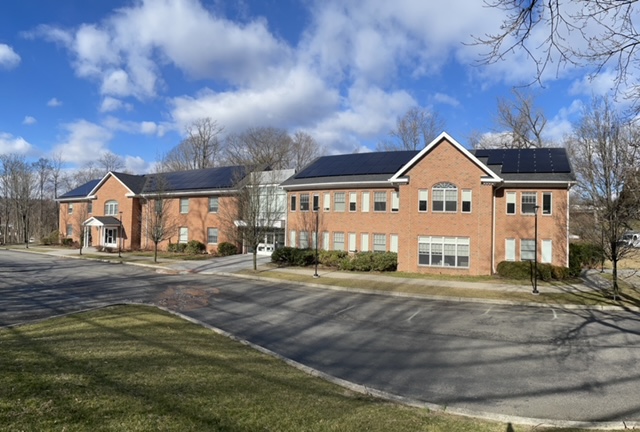
If you own a home in Hartford County, your electric bill probably reads like your neighbor’s. Residential rates here sit near 30 cents per kWh. That runs roughly 46% above the national average of 20 cents. For many households, solar panels in Hartford County now come down to simple math.
The average monthly bill across the county is about $325. In the city of Hartford it climbs to roughly $354. West Hartford homeowners average about $294 a month, or $3,528 a year, on electricity alone.
Why Hartford County bills keep climbing
Nearly every home in the county buys power from Eversource. On January 1, 2026, the Eversource standard service supply rate rose to 12.64 cents per kWh. That was a jump of about 13% from the prior winter rate.
Supply is only half the bill, though. Delivery charges carry the rest, and Eversource filed for another increase on May 20, 2026. That request asks Connecticut’s Public Utilities Regulatory Authority for roughly 13% more from residential customers. PURA has not ruled yet, and any approved change would take effect July 1, 2027.
Here is the part that matters for a solar decision. You cannot negotiate a utility rate. You can, however, fix most of your cost of power for 25 years by producing it yourself.
What solar panels cost in Hartford County right now
Connecticut pricing averaged about $2.67 per watt in mid-2026. West Hartford came in slightly higher at roughly $2.77 per watt. A 10 kW system in that range lands near $28,000 before incentives.
Your own number will differ. Roof pitch, shading, panel count, and any needed electrical upgrades all move the price. $0 down financing is an option, so many homeowners start with a monthly payment rather than a check.
How Connecticut’s RRES program pays you
Connecticut compensates home solar through the Residential Renewable Energy Solutions program, or RRES. Eversource and United Illuminating administer it under PURA’s rules. You pick one of two structures, and that choice locks in for 20 years.
Netting works the way most people picture solar. Your meter credits production against consumption at your retail rate. One catch applies to 2026 enrollees: a charge of 4.02 cents per kWh now hits your total generation, not just the power you export.
Buy-All sends every kWh you produce to the grid at a fixed rate for 20 years. You then buy all your household power at the standard retail rate. Predictability is the appeal here, because that rate does not drift.
One more 2026 detail deserves your attention. The REC incentive rate for new netting enrollees currently sits at $0.00 in both Eversource and UI territory. Any installer quoting you REC income on a new Connecticut netting project this year is quoting something that no longer exists.
Two exemptions that quietly improve the math
Connecticut waives its 6.35% sales and use tax on solar equipment under CGS 12-412(117). Panels, inverters, racking, wiring, and paired battery storage all qualify. Nothing needs filing on your end, since the exemption applies at the point of sale.
The state also exempts residential solar from property tax assessment under CGS 12-81(57). Solar typically adds real value to a home. That added value does not raise your assessment, and the exemption never requires renewal.
Does a battery make sense in Hartford County?
Storage answers two separate problems: outages and rate exposure. Connecticut’s Energy Storage Solutions program changed on April 1, 2026, and the structure now leans on performance rather than a large check up front.
Enrollment pays $30 per kWh of capacity for standard customers, or $130 per kWh in Grid-Edge areas. Performance payments then run for 10 years at $300, $450, or $550 per kW-year depending on your tier. The tradeoff is patience, because most of the value arrives over a decade instead of at install.
We install Tesla Powerwall as a certified installer. For a household with a well pump, medical equipment, or a home office, backup often justifies itself on its own.
What about your roof?
Panels last 25 years, so the surface under them should have similar life left. Hartford County housing stock skews old. Plenty of roofs in Manchester, New Britain, Bristol, and Newington are near the end of their run.
Our roofing division works in house. Replacing a roof and mounting panels as one project avoids paying twice to remove and reset the same array later.
So is solar worth it here?
For most owner-occupied homes in the county with decent southern exposure, yes. The case rests on a 30 cent utility rate, a 20-year RRES commitment, and two permanent tax exemptions. High electric rates are what make Connecticut solar work, and Hartford County has them.
Solar makes less sense in a few situations. Heavy shade, a roof you are not ready to replace, or plans to sell within two years all weaken the case. An honest assessment should tell you that plainly.
Working with Infinity Energy
We have installed solar across New York, New Jersey, and Connecticut since 2009, with more than 10,000 completed projects. EnergySage ranks us Elite+, the top 4% of installers nationally, and named us Installer of the Year. We also hold an A+ rating with the BBB and belong to the Amicus Solar Cooperative.
Coverage matters as much as the installation itself. Our panels and production carry a 25-year warranty, inverters carry 10 years, and workmanship carries 25.
Curious what the numbers look like for your address and your Eversource bill? Reach out for a free, no-pressure solar assessment and we will walk you through the math either way.