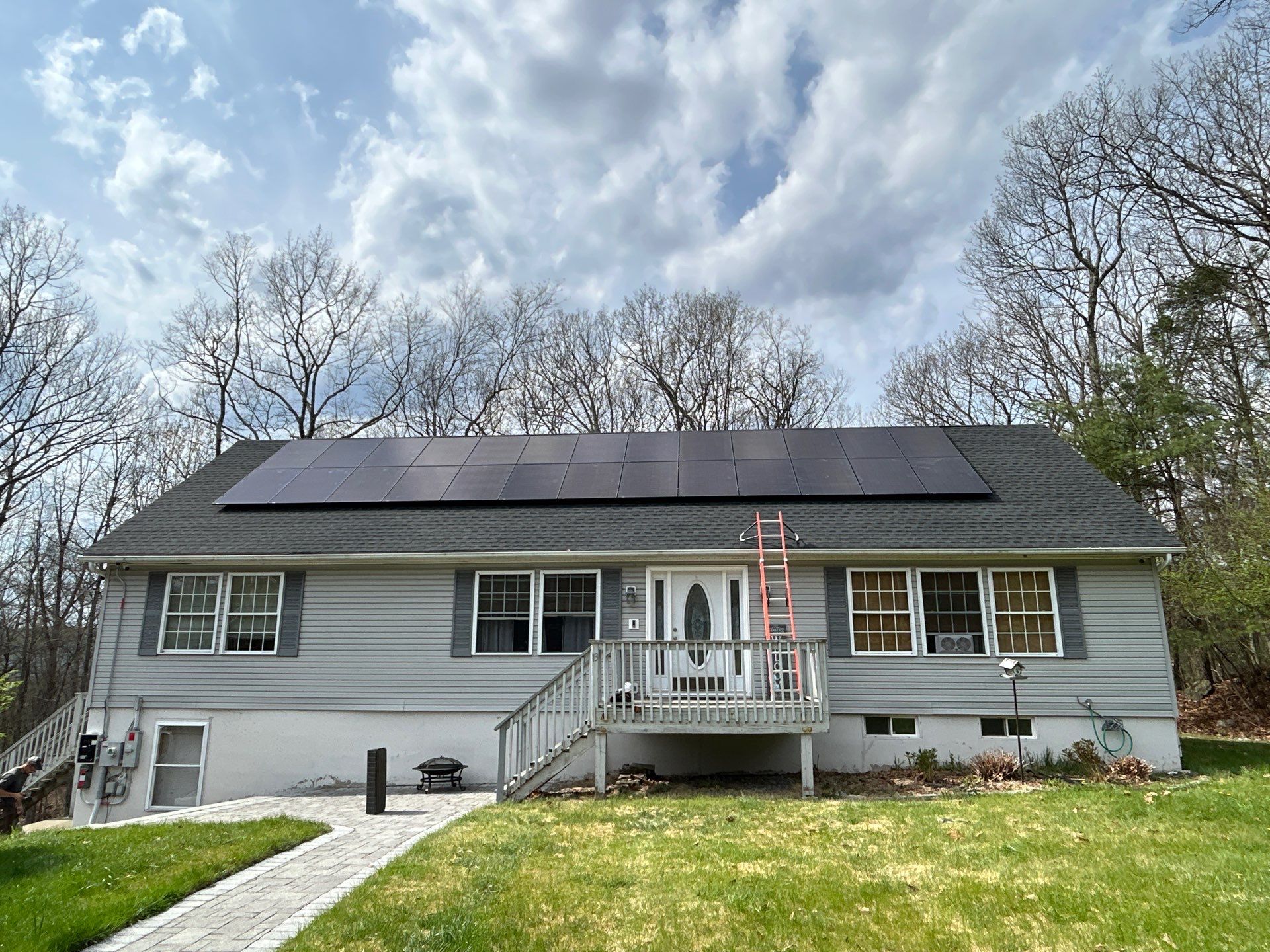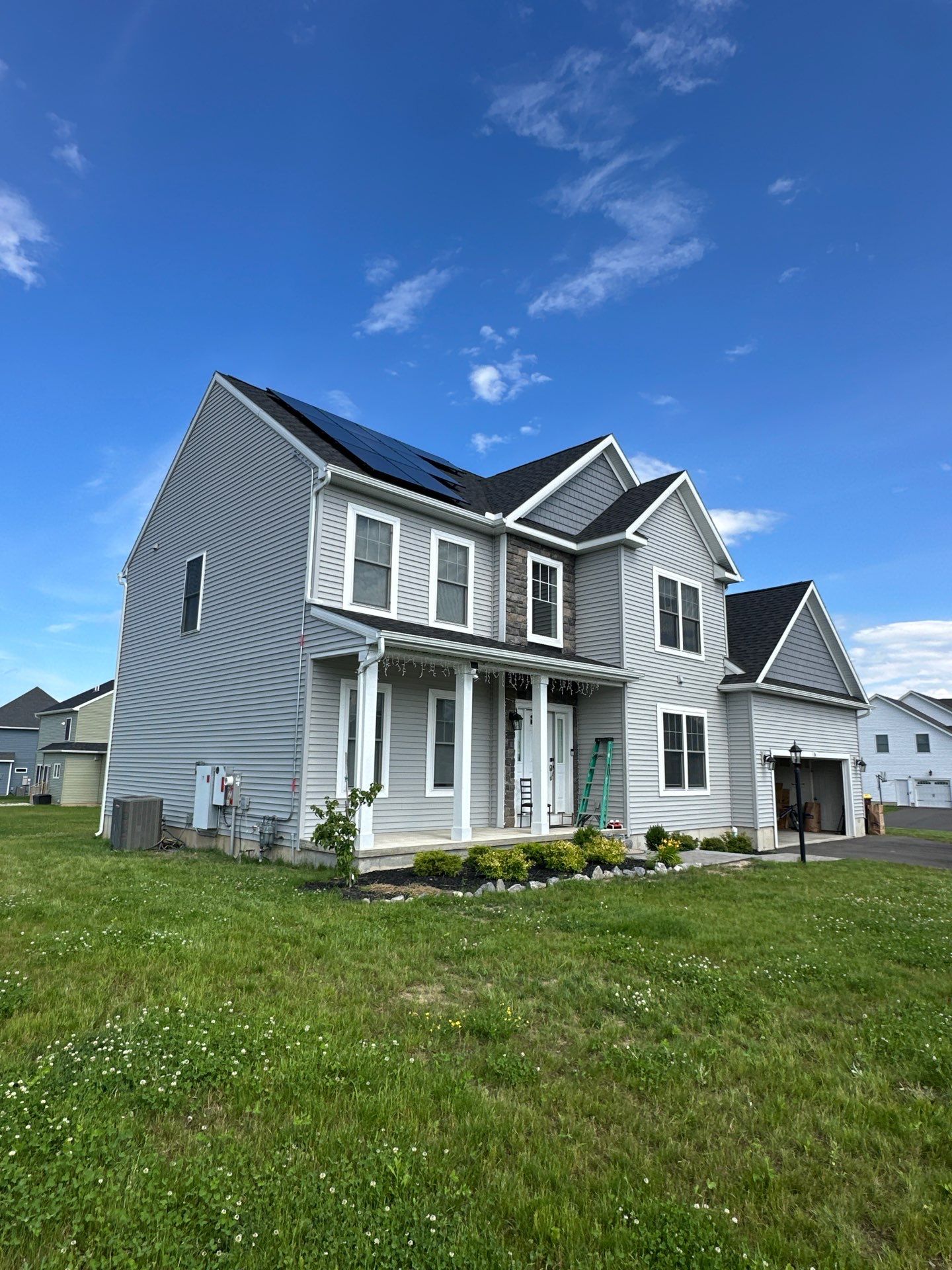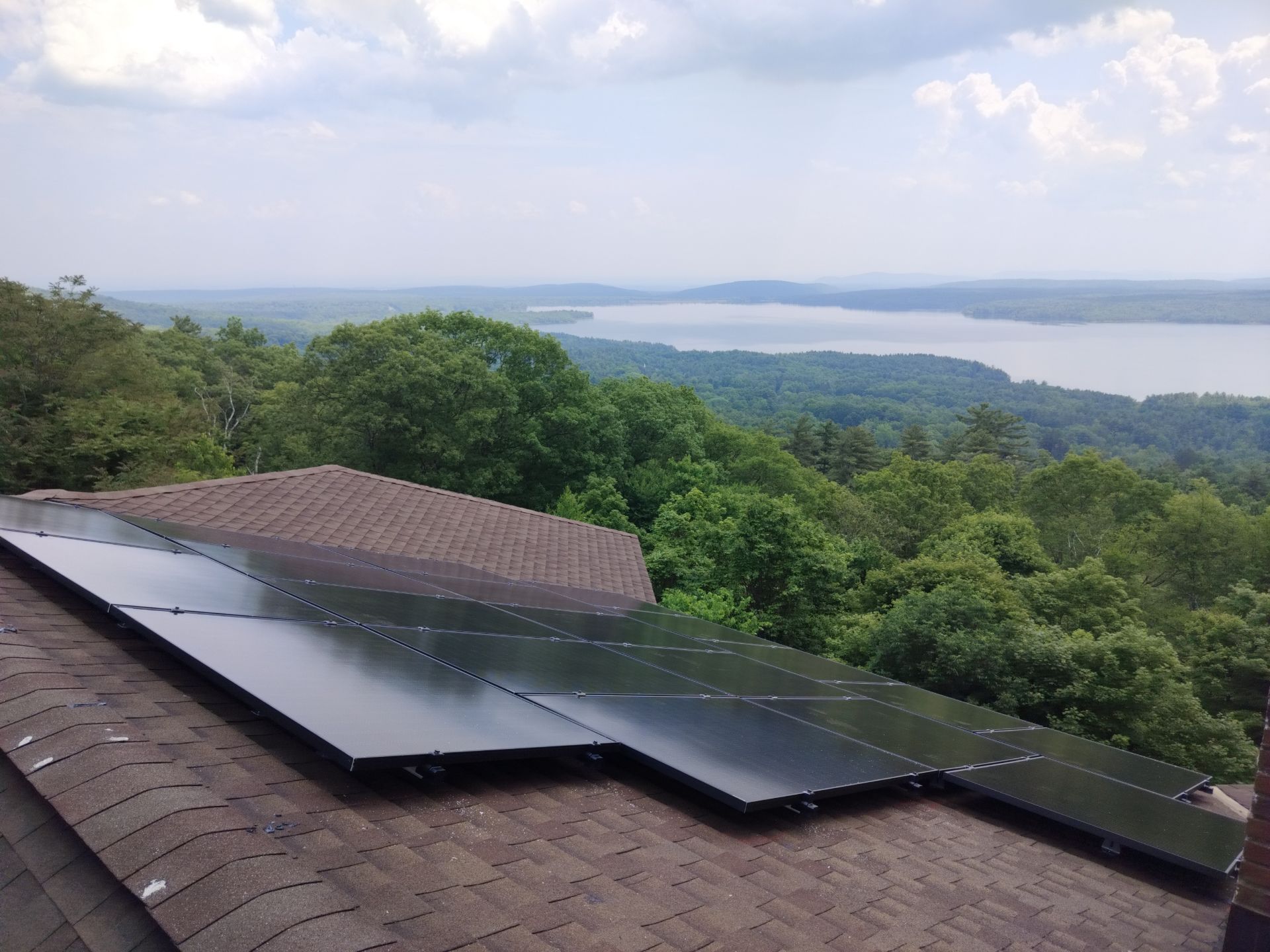

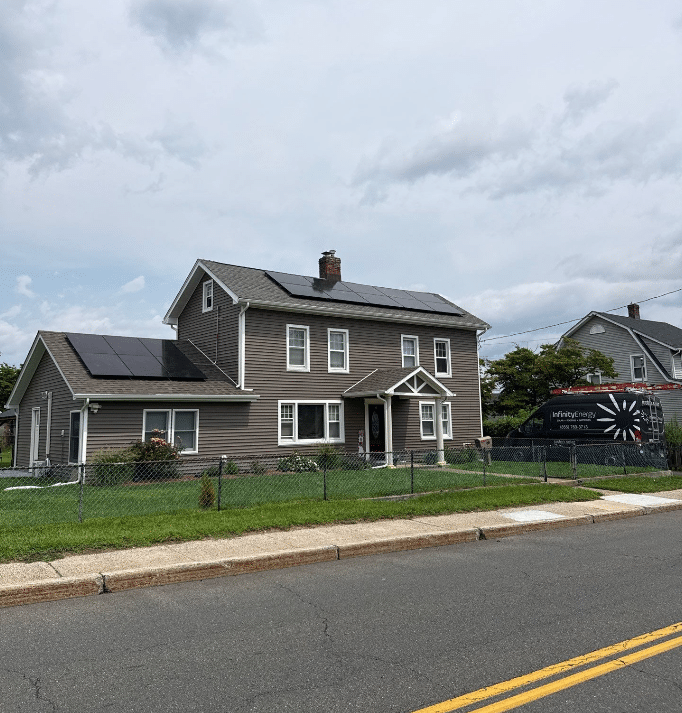
Fall solar installation carries a practical advantage in the Northeast, and it has little to do with sunshine. September through November is when installer calendars open up. Roofing weather still cooperates, and permit offices move at a normal pace. Start a project now and your system can be running before the long spring days arrive.
Infinity Energy has completed more than 10,000 installations across New York, New Jersey, and Connecticut. Here is what we see every autumn, and how homeowners can use the season to their advantage.
Summer Creates the Backlog. Fall Clears It.
Interest in solar spikes the moment July and August bills land. A homeowner opens a $400 statement and calls three companies. Installers across the region fill their calendars in the same six-week window.
By late September that rush eases. Crews have more open dates and site surveys get scheduled sooner. Engineering moves faster too, because fewer projects sit ahead of yours.
None of this changes what a system produces over 25 years. It changes how quickly you reach the finish line.
Roofing Weather Runs Out Before Solar Weather Does
A good share of the homes we evaluate need roof work before panels go up. Fall is the better window for that work. The reason is chemistry rather than convenience.
Asphalt shingles seal with heat. GAF, Owens Corning, and IKO all point to 40 degrees Fahrenheit as the practical line for easy installation. Below it, shingles stiffen and the self-sealing strip may not activate until warmer, sunnier weather returns.
Roofers can hand-seal shingles in cold weather, and our crews do exactly that when a job calls for it. Every major manufacturer publishes a spec for it. Even so, a 55-degree October afternoon beats a 35-degree January one. Our roofing division works in house, so one company owns the roof and the array. No two contractors pointing at each other.
What Happens Between Signing and Switch-On
Most tri-state projects run 8 to 14 weeks, from signed agreement to Permission to Operate. Panels usually go up in a day or two. Everything else is paperwork and other people’s calendars.
The sequence looks like this. Site survey, engineering, municipal building permit, utility interconnection application, installation, township inspection, then PTO from your utility. Each stage depends on an office you do not control.
Sign in September and you are realistically energized by early winter. Wait until March and you land in the spring rush instead. Our full installation timeline breaks down what each stage involves.
Yes, Winter Production Is Lower
We would rather set that expectation than dodge it. Systems in the Northeast generate roughly 55 to 60 percent of their annual output in the warmer half of the year. December and January commonly run 30 to 40 percent below July and August, and snow cover can widen that gap in a hard winter.
Annual totals are what matter, not any single month. Net metering in New Jersey and New York, plus Connecticut’s netting tariff, let a summer surplus cover the winter shortfall.
Cold weather brings one bonus. Panels run more efficiently at lower temperatures. A standard module loses about half a percent of its rated output for every degree Celsius above 77 Fahrenheit, so a crisp February day is working in your favor. Snow sheds off panels readily too. NREL finds sliding is the main way snow clears an array, and steeper tilts shed faster. Our crews routinely see arrays clear before the rest of the roof does.
Timing Touches Your Incentives Too
New York. The state tax credit covers 25 percent of your system cost, up to $5,000. NY-Sun rebates run in capacity blocks that close as each region fills, and residential blocks are currently allocated statewide, so we check block status when we quote you rather than promise a number. Solar equipment is exempt from state sales tax. Most towns also apply a 15-year property tax exemption on the added value, though it takes a filing and a number of school districts have opted out. We tell you which ones apply to your address.
New Jersey. The SuSI program pays SREC-II earnings of roughly $800 to $1,000 per year for 15 years on a typical home system. Your 15-year clock starts at commercial operation, and your registration date locks the rate you keep for all 15 years. That rate already stepped down from $85 to $77 per MWh this past July, and the Board reviews it at least every three years. Full 1-to-1 net metering is in place today, with a successor policy under BPU review. JCP&L’s summer rate period also ends after September, and that over-600 kWh summer block is when each offset kWh is worth the most.
Connecticut. This one is genuinely time-sensitive. The RRES program sets your compensation for 20 years based on your enrollment year, and there are two paths. Choose Buy-All and your rate locks outright. Homeowners enrolling in 2026 see $0.3289 per kWh. Choose Netting and your REC rate locks for 20 years while the credit itself follows the retail rate, and you pay a Solar Energy Adjustment of $0.0402 per kWh on your production. That adjustment jumped from half a cent last year, so the Buy-All versus Netting call carries real weight now. We run both numbers before you sign anything. Supply rates have swung hard on top of all this. Eversource generation jumped nearly 30 percent last January before easing on the July reset, and United Illuminating climbed about 17 percent over the same stretch. Volatility like that is the whole argument for locking 20 years.
All three states exempt solar equipment from state sales tax and shield the added home value from property tax. Each property exemption takes a form and a deadline, not just an install. Connecticut’s runs through the town assessor by November 1, which is one more reason fall paperwork beats spring paperwork.
Storm Season Is the Other Reason People Call in October
Nor’easters, ice storms, and high-wind events cluster between November and March. Homeowners who lost power for three days last winter tend to ask about batteries in the fall, not in July.
We are a Tesla Powerwall certified installer, and we size backup around what a household actually needs. That usually means the furnace blower, the well pump, the refrigerator, and a few circuits for lights and internet.
Connecticut’s Energy Storage Solutions program offers an upfront incentive plus 10 years of performance payments for qualifying batteries. It moved to a pay-for-performance structure in April 2026, so more of the value now sits in participating in dispatch events instead of the check at install. For Eversource and UI customers it still brings real money to the table, and we walk through what participation actually looks like before you commit.
Pairing storage with the solar install also costs less than adding it later. One permit and one crew visit cover both.
Questions Homeowners Ask This Time of Year
Do you install through the winter? Yes. Crews work year-round in all three states. Snow, ice, and single-digit wind chills can push a specific install date, and roof replacements need that 40-degree window.
Is solar cheaper in the fall? Not from us. Equipment and labor cost the same in October as in June. What you gain is speed, not a seasonal discount, and we would rather say so plainly.
Should I just wait until spring? A spring start usually means a summer switch-on. You then miss a full winter of offsetting the highest kWh rates your utility charges. Connecticut homeowners face the added question of which enrollment year sets their 20-year rates.
What if my roof has 8 years left? Talk through it now. Pulling an array off and putting it back to reroof later costs far more than doing both jobs together.
Starting a Project This Fall
A good fall consultation covers three things. Your last 12 months of usage, an honest look at your roof, and the incentive stack for your state and utility. No pressure and no guessing.
Infinity Energy is an EnergySage Elite+ installer, a NYSERDA Gold installer, and A+ rated with the BBB. Systems come with a 25-year panel and production warranty, a 10-year inverter warranty, and 25 years on workmanship. Financing with $0 down is available.
Ready to see the numbers for your home? Request a free quote and we will map out a realistic timeline for your town and utility.