
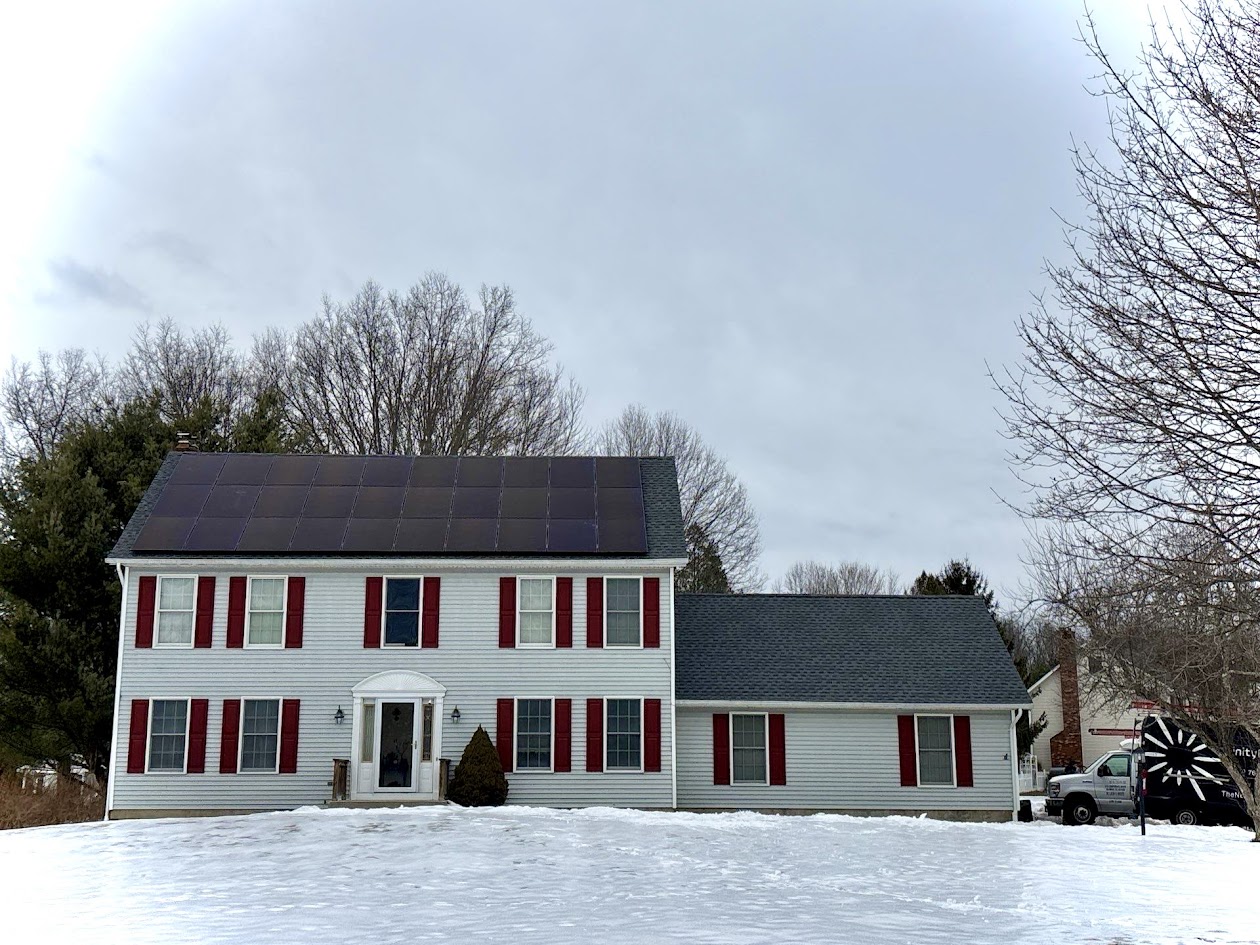
Yes, Solar Panels Work Through Northeast Winters
Every year the cold weather brings the same question from homeowners. Do solar panels in winter actually produce enough power to matter in New York, New Jersey, and Connecticut?
The short answer is yes. Panels run on light, not heat, so clear winter days still generate real electricity across the tri-state area. Let us walk through what truly changes when the temperature drops.
Cold Weather Can Help, Not Hurt
This one surprises most people. Solar panels often run more efficiently in cold air than in summer heat.
Manufacturers rate panels at about 77 degrees. When the temperature falls below that mark, the cells can convert sunlight a little more effectively. A crisp, sunny January afternoon offers good conditions for your array.
Heat is the real enemy of panel efficiency. The cold itself is not the problem that so many homeowners expect it to be.
Shorter Days Matter More Than the Cold
The bigger seasonal factor is daylight. Winter simply offers fewer hours of sun than June, and the sun sits lower in the sky.
Your system will produce less total energy in December than in July. That swing is normal, and a well-designed array plans for it across the full year.
Most of the dip lasts only about three months. By early spring, production climbs back up on its own.
How Much Less Power Will You See?
Production varies by month, not by a single flat yearly number. Your lowest output usually lands in December and January.
A typical tri-state system still generates meaningful power on bright winter days. The yearly total is what drives your savings, and that total already blends strong summer months with the quieter winter ones.
This is why we size every system around annual output. Our team models your roof, its pitch, and its shading before quoting a single number.
What About Snow on the Panels?
Snow is the one winter factor that can briefly stop production. Heavy cover blocks sunlight, and output can fall until the glass clears again.
Here is the good news. Most roof-mounted panels sit at a tilt, so snow tends to slide off within hours of sunlight. The smooth glass surface helps it shed fast.
Bright snow on the ground also reflects extra light back onto your array. That reflection can give a small production boost once the panels are clear.
Please never climb an icy roof to brush off your panels. The safer choice is to let the sun melt the snow for you.
Ice Damming and Your Roof
Some homeowners ask whether panels cause ice dams. These dams form when heat escapes through an under-insulated roof and melts snow unevenly.
Panels themselves do not create that problem. In fact, a row of panels can shield part of your shingles from harsh winter weather.
Good installation is what keeps a roof sound through freeze and thaw cycles. Infinity Energy runs an in-house roofing division, so one team handles both the roof and the solar. That tight coordination protects the flashing, the seals, and the long-term health of your home.
Net Metering Banks Your Summer Surplus
Here is the piece that ties the whole year together. Your panels usually overproduce in summer and underproduce in winter.
Net metering bridges that gap. When your system sends extra power to the grid in July, your utility credits your account. You then draw on those banked credits during the darker months.
New Jersey offers full 1:1 net metering, so summer credits offset winter use at retail value. New York and Connecticut run their own crediting programs built on the same seasonal idea. Your installer sets up the enrollment so the banking starts as soon as you switch on.
Winter Incentives Still Add Up in NY, NJ, and CT
The season does not pause the incentives that make solar worthwhile. In truth, winter is a smart time to plan an install for spring.
New York offers a 25 percent state tax credit worth up to $5,000, plus NY-Sun rebates, a state sales tax exemption, and a property tax exemption that most municipalities offer. New Jersey pays through the SuSI program, which earns SREC-II credits of roughly $680 a year for 15 years. Connecticut homeowners tap the current RRES program along with their own sales and property tax exemptions.
Every Infinity installation also carries a single 25-year warranty on your panels and their production. You keep that coverage no matter which season you sign in.
Is Winter a Good Time to Go Solar?
It can be one of the best times of the year. Installers often have more open scheduling during the colder months.
Book now and your system can be ready before the long, sunny days of spring arrive. You lock in today’s incentives and start banking credits the moment you flip the switch.
Infinity Energy has completed more than 10,000 installations across New York, New Jersey, and Connecticut. If you want honest numbers for your own roof, reach out for a free, no-pressure quote. We will show you exactly what winter and summer production look like for your home.